


Korean children’s right to health is not being protected adequately because the government merely reiterates the slogan of solving essential pediatric medical care but fails to establish and implement medical policies tailored to children, an expert group has pointed out.

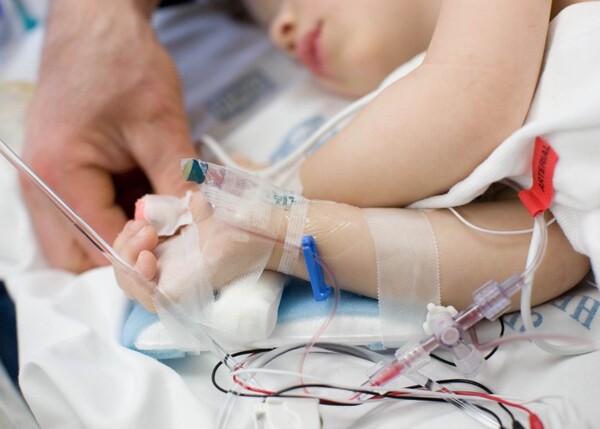
On Thursday, the Korean Children’s Hospital Association (KCHA) released a statement ahead of Children’s Day. The association cited some specific problems, including the supply of essential pediatric medicines, the low number of children’s hospitals, and the medical system for children that is tailored to adult medical care.
“For the past two years, we have been demanding that the unstable supply of essential pediatric medicines be resolved,” the association said. “However, when you go to a pharmacy, there are many non-reimbursed over-the-counter medicines, but reimbursed pediatric medicines are often out of stock.”
Noting that there are children who need syrup formulations, the KCHA said there is a medical reason for different formulations. However, when pediatricians raise the issue with the Ministry of Food and Drug Safety, the answer is to grind up adult medications and give them to children, the association pointed out.
“We have proposed bed ratio adjustment, reverse differential fee system, and off-season idle bed loss compensation system as a solution to survive due to the murderous ultra-low fee system, but the government gave no answers,” the association said. “If this continues for two to three years, children’s hospitals will disappear following pediatric and adolescent departments.”
The association noted that the government provides a huge budget that children’s hospitals cannot compete with and even takes away doctors under the pretext of creating a pediatric emergency medical center. It added that policymakers should establish and implement medical policies suited for children but continue making a skit by reinforcing the healthcare system tailored to medical policy for adults.
To address these issues, the KCHA called for establishing the “Division of Pediatric and Adolescent Medicine” within the Ministry of Health and Welfare and enacting the “Basic Act on Children’s Health in Korea.”
“If a pediatric and adolescent medical division is established within the Ministry of Health and Welfare to specialize in establishing and implementing children’s healthcare policies, the government will be able to accomplish an integrated system design and implementation, ranging from pediatric essential drug pricing policies to essential medical supplies,” the association said.
The association said that if the government combines laws scattered around, including the Child Welfare Act, to comprehensively protect children’s health, it can produce sufficient effects even without using the 380 trillion won ($276 billion) budget to boost the plunging birthrate.
“Sunday is the 102nd Children’s Day. We hope that the adults in power in this country will create a system that works so that they can build a future filled with comfort and hope for our young citizens who don’t have the right to vote,” the KCHA said.
link